Showing posts with label bitches be stabbin. Show all posts

Tuesday, October 7, 2014

The Scariest Thing on Television

You guys.  I was seriously just about to post my promised review of Gotham (coming right up, I promise!) when a quick cursory fact check via Twitter informed me that Ryan Murphy and Brad Falchuk, creators of Nip/Tuck, Glee, and, my personal favorite, American Horror Story are spinning off the latter show into a new franchise that just may be the scariest thing on TV; reality television.

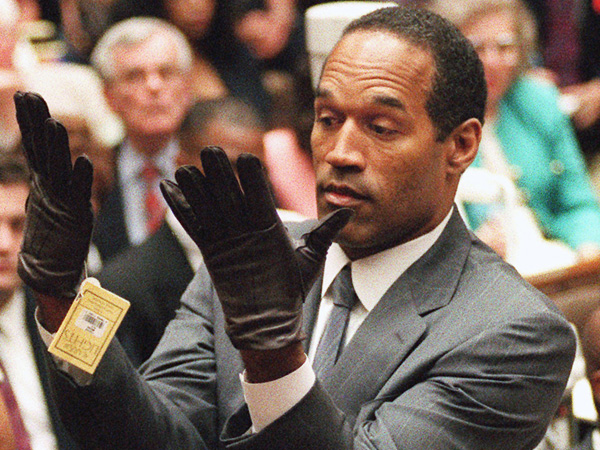
And by that I mean actual reality television, not the scripted Kim Kardashian stuff.  The new series? An anthology in the same vein as American Horror Story that will try to do for the weekly true crime genre what AHS has done for the weekly horror show.  The new series will be called, seriously, American Crime Story and season one will be the O.J. Simpson story.

Terrifying!

I'll be honest that I thought this was some kind of April Fool's Day joke when I came across it, but low and behold it is, in fact, real.  The creative team behind AHS (season four debuts tomorrow.  Jesus, I have a lot of writing to do...) have been "looking for the right property that could serve as an extension of the American Horror Story brand."

This may not be a crazy idea.  An anthology series about America's most notorious crimes would certainly fit the bill in terms of expanding AHS's franchise brand.  AHS has already shown itself to be very willing to tell stories in multiple time periods and presumably the format would allow Murphy et al to visit any significant true crime from all of American history.

That's the good news.  My worry is that we're going to get a series about stories that are already overly sensationalized by the team that brought us Glee.  Subtle is not their bailiwick.  And while I don't think a poorly filmed take on O.J. Simpson is likely to do anything like, say, restart the L.A. riots, I do worry about how well the show will be able to present these stories, especially if the aim is to do them as true crime and not as the kind of "true crime" we saw in season one of AHS with the Black Dahlia.  As dramatic as murder is in real life, Hollywood has typically felt for some reason that it isn't sensational enough. That kind of sexing up of history will be harder to pull off in cases like O.J. Simpson, which is a story that existed in the era of modern news, but it will be significantly harder if season two is the Lindbergh Baby.

American Crime Story will air on FX sometime in 2015.


Wednesday, August 6, 2014

Orange is the New Black: Season 2

Last night Clovis and I had a little chat about Orange is the New Black Season 2. We were pretty much in agreement that it was amazing...so I hope you are ready for a love fest. I mean, hopefully the chat is funny too, but it's basically us gushing about the show. Enjoy!

Maggie Cats: So, season 2! Thoughts?

Clovis: In no particular order...man, Vee is scary. I still don't give a shit about Piper. Larry is still a douche. But that's what you get when you cast Jason Biggs. Poor Crazy Eyes is going to be even more fucked up than ever. That's my 30,000-foot view.

Maggie Cats: I liked the this season even better than the first. I think introducing Vee and focusing on the power struggles within the prison was genius. And I do not dislike Piper as much as everyone else. I think side-lining her a bit was a good move....but basically, I have too much in common with her to hate on her.

Clovis: Haha, would you like to take this moment to confess anything about your secret lesbian past smuggling drugs? We can keep it between us and the blog readers.

Maggie Cats: I meant that I am a white privileged liberal self-focused lady. I didn't smuggle DRUGS.

Clovis: Livestock?

Maggie Cats: Only children.

Clovis: Fair.

Maggie Cats: Under my muumuu.

Clovis: In Morocco.

Maggie Cats: WHO TOLD.

Clovis: But back to the point, I really liked Vee, all things considered. One of the things that impressed me was how well she actually set up a functioning and stable family environment. You know. When she wasn't being a total sociopath.

Maggie Cats: She is a psychopath and excels at finding someone's emotional weakness and pouncing on it like a vampire. And this season was all about the created family as power. Joss Whedon is like, "they stole my favorite theme!"

Clovis: At least they let him keep his reputation as a character-murderer. That was nice of them.

Maggie Cats: True. Change of topic: I think Taystee might have become my favorite character this season. She is just so compelling.

Clovis: I really liked the arc they gave her. She was an interesting character in season 1, but season 2 really got to let her play with who that person is. I loved that she was the only one who understood the job fair, for example.

Maggie Cats: But she still didn't UNDERSTAND the job fair

Clovis: EXACTLY! That's the story of Taystee's whole life - she understands the score so much better than anyone around her, but she always misses the one crucial detail that ends up biting her in the ass. She got that Vee offered love and protection and how important that was. She just didn't understand the cost it came at. Likewise, in season 1, she understood how to do what she needed to do to get released, but didn't understand what was going to happen once she was back in society.

Maggie Cats: Nailed it. And OMG we have to talk about the twist with Lorna. It was so amazing and surprising and didn't feel like a cheat at all. Guess what, audience? BITCH IS CRAY. And not just cray, but like 50 shades of cray.

Clovis: I was wondering what was up with that all through last season. I kept thinking that they were going to reveal that Michael wasn't real at all - just someone she made up in her head. When we finally saw her with the collage on her wall, I kind of figured that it was all just made up. Turns out I was close.

Maggie Cats: It's like the revelation didn't change how much I love her at all--which objectively feels strange. I did not even consider that she could be crazy. I think I have been consistently underestimating how well this show is going to flesh out everyone in the cast and not just a handful of main characters (like most television programs). This is what LOST was trying to do.

Clovis: Agreed. Not a single person in OITNB has yelled "Waaaaaaaaaallltt" once! Definite plus in its favor.
Maggie Cats: But seriously, I care about every single one of these characters. How often does that happen? Even the asshole prison staff. I still find them interesting, even if they are idiots.

Clovis: Like I said, my closest exception is Piper. I don't hate her, I just don't care about her when the other characters are so much more interesting to me.

Maggie Cats: I think the only thing they should do next season is just get rid of Larry completely from the plot, his story is kind of done. I didn't actively dislike his and Polly's subplot, but I think it has run its course. So see ya!

Clovis: Agreed, though I'm sure they'll leave him on. Piper needs that connection to her "real" life, so I'm sure they'll still be a presence. Although, in Piper's favor, I loved the moment they gave her during her furlough when one of the family members said to her that she must be so anxious to get out and return to her old life and Piper thoughtfully responded that actually, she kind of wasn't. Piper is developing more of a, dare we say, authentic existence inside the prison than she ever had outside it.

Maggie Cats: I just find Piper interesting. Her development to having more backbone...but also her inability to hold back on correcting people and coming off as a know it all. She just feels like another completely real person.

Clovis: Yeah, I don't think that's inaccurate. I just prefer the other characters to her. Big case in point this year was Poussay. One of the things that set me off with Poussay last year was that at times you could almost see the real actress coming through the character.

Maggie Cats: I think the problem I have, which isn't really fair of me, is that the actress is so stunning that she doesn't seem realistic as the character.

Clovis: Like, the character would suddenly lapse into a flawless British accent in order to make a joke or something. Skills that the real-life actress has but I didn't think that character would. Then suddenly this year we get her backstory of having been an army brat and likely a very competent one, given that she apparently mastered German on her own. Suddenly the character clicked for me. Although yes, agreed - she's been made "Hollywood ugly". Which is to say, they shaved her head.

Maggie Cats: I confess that I did not find her flashbacks very compelling. But again, different strokes. The fact that there is such a myriad variety of characters and we can each connect with different ones is a reason why the show is so great.

Clovis: That's definitely the strength of the show - the variety of its ensemble cast. Which makes me grateful that they got a second season (and are on their way to a third) so that they can keep showcasing all these characters.

Maggie Cats: One of my favorite blogs, Tom and Lorenzo, writes about the show. And they nailed it when they said it is telling womens' stories that nobody else is telling.

Clovis: Completely agree. The show blows both the Bechdel test and the Mako test out of the water. 

Maggie Cats: And watching it, you aren't like "how nice that someone is telling stories about ladies." It's just like, "this is a show that is brilliant. Oh, and hey, most of the characters are women. Neat." The fact that it is about women is not "a thing."

Clovis: It reminds me of some authors when they're asked about how they write women characters and the ones who respond by saying they write characters first and foremost and that those characters are women are secondary to having good story lines and good beats. I understand the flip side to that argument, that representation is important and that you do have to bear in mind that women's experiences are different from men's, but I think the point about focusing first and foremost on telling authentic stories is what helps to move the show into the space it occupies so well.

Maggie Cats: What you said reminds me of how Joss Whedon answered the question, "why do you write such strong female characters?" His response was, "how is this even a question? Why aren't you asking a hundred other guys why they don't?" And to me, "strong" doesn't necessarily mean kickass. It means characters that are actual people.

Clovis: For better or for worse, one of the unintended consequences of Joss Whedon writing characters like Buffy that are "Strong Female Characters" is that while Hollywood is slowly getting more comfortable with having female action characters, there's still a rule that a "strong" female has to be a tiny, petite blonde girl who can inexplicably punch a guy five times her size. That's an overreaction to the characters that writers like Whedon were trying to create, but it's the state we're left with. What makes OITNB so interesting to me is that there is no similar requirement here.

Maggie Cats: I'm not sure that idea is limited to "strong" female characters...I think it's more that Hollywood wants ANY female character to be petite and hot. So I think I disagree with your point on that one, but respectfully. Oh, wait, I obviously mean DISRESPECTFULLY

Clovis: In this show we get women of all body types, ethnicities, and backgrounds. And while some of them are physically strong and intimidating, others are "strong" in the sense that they're just well-written characters. Punch me and disagree with me. ;)

Maggie Cats: Hmm...I am neither blonde nor petitie. But I never turn down an offer to punch someone. I do prefer to give a kidney shot though.

Clovis: So what are you interested in seeing them do with the show in Season 3? 

Maggie Cats: You know, I have NO IDEA.

Clovis: Obviously there is more about the characters that I want to see them explore, but one of the things that I'd like to see more of is something on the recidivism that Taystee touched on in season 1. 

Maggie Cats: I don't even know what I want. I just trust the show to take me along for the ride and to tell the story the writers want to tell.

Clovis: I'd like to see them take a look at how the prison system works for women who are trying to integrate back into society. (or doesn't work, as the case may be.) 

Maggie Cats: That would be interesting. I think we will spend more time outside the prison with the fugitive chase. 

Clovis: Somewhat related, I'd also love to know about the guard who had the hilarious problem with the nuns. As someone who grew up Catholic, I can completely understand where he's coming from. If he could sing more about the divorce that his mom and dad should have had but for the church, that would be cool too.

Maggie Cats: YES! That was awesome. Again, a tertiary character that I never really cared about all of a sudden became completely intriguing. His song was hysterical.

Clovis: I love the romance between him and the female guard. Like, I don't need a full episode on the two of them, but I always want to see a few lines from them in each episode.

Maggie Cats: It's just so graceful how the show is able to have these little character moments that carry through the season and then you get a payoff.

Clovis: Another question for season 3 (since we haven't even talked about Red yet): Will Red ever get to eat that chicken? 

Maggie Cats: HAHA. Nope. And she is totally going to find out Piper lied about going to the restaurant too. She will have VENGEANCE.  

Clovis: Vengeance or disability, right? Sounds like if Red learns the truth about her restaurant it could be the thing that breaks her. Especially since she doesn't have the prison kitchen anymore. Another possible theme for season 3 (building off the "family is power" theme in season two): Will we see racial tensions getting more pronounced than they have been? Red was certainly building up her people, possibly as a preliminary move to take back the kitchen from Mendoza. 

Maggie Cats: I love that my answer is "I have no idea." Anything could happen. Sidenote: I hope the old ladies take over. Those bitches mean BUSINESS. 

Clovis: Hell yes. I loved some of their lines about how no one thinks they can still cut you just because they have grey hair. I would love to see an old lady cabal start to form some real power plays in that place. It would be like a Godfather thing. 

Maggie Cats: It wouldn't surprise me--anything could happen on this show! Ok, let's wrap this up. I think we both feel this show is amazing. And I loved Season 2 even more than Season 1. Agree or disagree? 

Clovis: Definitely agreed. 

Maggie Cats: You are right and circle gets the square! 

Clovis: I was right? In what way? (not that I'm denying it...)

Maggie Cats: Your opinion was the same as mine and therefore it was correct. You get to avoid the kidney shot. Congrats!

Clovis: I always hoped this day would come.

Maggie Cats: Don't stop believin'.
Tuesday, July 8, 2014

Ehrmagerhd Sperts Merbers!

Okay, peaches. Now that the U.S. Men's Soccer Team HAVE (PLURAL) lost to Belgium and we, as a nation, HERETOFORE BOYCOTT WAFFLES AS WELL AS POMMES FRITÉS*, let's settle into some Netflix while we await the World Cup final with some sperts merbers.  Who needs carbs? We need to look sick in our soccer gear. 


The Price of Gold

You guys, you guys, you guys. Nancy Kerrigan and Tonya Harding. You know you love this shit. We were treated to a recap of the Nancy and Tonya saga during this past Olympics in Sochi. NBC produced an original docu that aired, weirdly enough, before the ladies' singles figure skating finals. For the NBC production, Mary Carillo was able to gain access to Harding and Kerrigan for sit-down interviews. The Price of Gold was produced as part of ESPN's 30 for 30 series, and features mostly interviews with Harding, Harding's childhood friends, and former coaches. Kerrigan only makes an appearance in figure skating and news footage. 

 The subject of many a late-night joke, the Nancy and Tonya story was one of those media events that took on a life of its own, garnering hours of media coverage and pages of newsprint devotion. The event and the spectacle that followed has not yet been forgotten by the public consciousness. It elevated the popularity of the sport, and apparently Tonya's side of the story has been turned into a musical. (The part of my brain that loves trashy media is super stoked about the latter.)

The story was simple enough. Tonya Harding was the 1991 Skate America champion, U.S. figure skating champion and a second-place finisher at Worlds. Not too bad for a girl who grew up in a poverty-stricken and dysfunctional family and who famously took skating lessons at the local mall because she couldn't afford to study privately. She was blue-eyshadowed and a little trashy, and definitely didn't fit the mold of the Disney princess-esque pseudo pageant queen that some figure skating fans have come to expect and demand. Contrast that to Nancy Kerrigan, who grew up in a working-class but loving and stable family and who fit the stereotype of the beautiful and balletic skating champion. In spite of Tonya's seeming disadvantages, it was she who won the U.S. National title in 1991, with Kerrigan coming in second.


In spite of their differences, both ladies seemed poised to take home a medal at the 1994 Winter Olympics in Lillehammer, Norway. Then things all kind of went to shite. On the morning of January 6, 1994, just weeks before the start of the Olympics, Nancy Kerrigan was clubbed in the knee as she came out of practice at Cobo Arena in Detroit. At first, the attack seemed to have come out of the proverbial ether, but suspicion soon fell on Tonya Harding after it was revealed that Kerrigan's assailant, Shawn Eckhart, was associated with Harding's ex-husband, Jeff Gillooly. Harding was accused of masterminding the plot against Kerrigan. The motive? Jealousy. Money. The usual suspects.

We skate to the death!

You see, although Harding had the titles, Kerrigan had all the corporate sponsorships, and thus, all the money. (Kerrigan was famously gifted with Olympic skating outfits by fashion designer Vera Wang.) Harding was struggling financially (she became famous for her "homemade" costumes) and felt unsupported financially by her skating federation, and was angry that no corporations had approached her, whereas Kerrigan had lined up sponsors ranging from Campbell's Soup to Evian Water. Remember, Harding was the champion, not Kerrigan.

The theory is that Harding felt Kerrigan was her biggest competition for the gold medal. The federation, and the corporate sponsors, clearly adored Kerrigan.  Nothing was ever proven against Harding, but the suspicion was that Harding thought if she could knock Kerrigan out of contention for the gold medal in Lillehammer, then she would almost certainly win. The incentive for winning the gold was motivation enough. The gold medal comes with not only all the media exposure, but a cash prize, and is generally accompanied by the aforementioned corporate sponsorships. 

Harding's feelings, according to the 30 for 30 interview, are that there is a lot of corruption in the figure skating world, and that the Olympic champion is "pre-selected" from among a list of acceptable candidates. Harding's current feeling is that her skating federation thought she was fine as the U.S. champion, but she wasn't acceptable as a World or Olympic champion, regardless of what she'd done at the 1994 Winter Games. Her homemade costumes, her athletic style, and her mouthy attitude were not marketable. (Every time I picture figure skating authorities, I picture Barry Fife from Strictly Ballroom. See below.)


To date, Tonya Harding retains her innocence. She was stripped of one of her U.S. National Champion titles and due to her famous "skate lace malfunction," did not medal at the 1994 Olympics. Nancy Kerrigan did not win gold that year, either. That honor went to Ukrainian upstart, Oksana Baiul. 


Nancy Kerrigan retired from amateur figure skating competition after Lillehammer.

Harding was banned from figure skating for life and never skated professionally again.

The sad part of it all was that Harding was a very talented, if troubled, skater. She went down in history as the first woman to land the difficult triple axel in competition.

Why, why, why?


Schooled: The Price of College Sports

You want to get schooled? 

Gather round children and hear the tale of the NCAA. This documentary is about a sports scandal, but it makes the Harding/Kerrigan fiasco look like amateur hour. I am a big supporter of college sports and of my alma mater (WE ARE SPATANSSS!!!), so this documentary made me several kinds of angrysad.

Schooled is an expose of the shocking level of greed and corruption that has taken over the NCAA. It focuses on college players, "student athletes," who are being taken for a ride at the hands of a supposedly beneficent system.


Let's pretend you are a high school athlete who has been recruited by a major football university to play gridiron football for that school, and in the process, you will be earning the school major buck$$$ as well as potentially helping the team to a national title. If all goes well and you are not injured in play, you can then be recruited by the pros. In exchange, these 17 and 18-year-olds receive tuition, room and board, and a college education that, in other circumstances, they may not be able to attain. 

Sounds like a great deal, right? Well, it's more complicated than that. As recent debates have indicated, college players are agitating for more compensation, unionization, and pay-to-play. Why have they got such a problem? The deal the athletes make with the NCAA is not as great as it seems on the surface. 

College sports in the United States is a multi-billion-dollar industry. Colleges and universities make serious bank off tickets, concessions, and merch. So, the players get a cut of that, of course. Ehhh, not so much. Profits from football and basketball games go to the NCAA and the schools.  Players are actually banned by NCAA rules from making any money off their likeness. For example, if you are a star quarterback for University of State U., the school may manufacture as many jerseys with your starting number on it, but they will not pay you any of the proceeds. If the school decides to make your team the subject of a video game created by EA sports, they can manufacture a computer generated image of you, call it you, stick your jersey number on it, sell the game, make a profit, and they do not cut you a check. They can also make multi-million-dollar deals with television networks to air games in which your team will play. Again, no dohlars for you.


But, but, but, Arsenic Pie, they get a free education! That's enough, right?

Ehh, yeah. About that "education." This is not to say that there isn't such a thing as an outstanding student and athlete at the college level. However, many athletes who are recruited by universities are not academically prepared for the rigors of a college education. Athletes are often admitted on a special status -- that means they often have lower grades and SAT scores than regular students. For example, Stanford University, with a big football program, is famously highly selective of its undergraduate students. I am not being a snob here, but higher grades and test scores are often the result of better pre-college academic preparation (they are often also a function of class privilege and wealth, but that's for another day), and better pre-college preparation often, but not always, results in higher levels of success in college. (Author's note:  I slacked off in high school but graduated college with a 3.7 #humblebrag.) Regular students at University of State U. are expected to attend a certain number of class hours and keep themselves out of academic probation. Student athletes are expected to remain academically eligible to play, in addition to the 40 to 50 hours a week they are expected to be in training and practice. There is really not a whole time for the athletes to attend class or study. This has given rise to "special classes" for athletes, in which they are required to write a paper or read a book, or some other essentially symbolic classwork that they actually have time to do. This has led to "outrage" over student athletes taking "fake" classes. Whether the classes are "fake" or not, what's true is that the athletes are not getting the same quality of education that the normally matriculated students are getting. It may be free for many of the athletes but, I guess...uh...you get what you pay for. (???) Since student athletes have to stay academically eligible to play, and since many of them are academically unprepared, and since many athletes do not have time to keep up with a regular course load on top of their training schedule, is it really any wonder that universities have resorted to giving athletes special classes so they can stay eligible? Because the schools are deliberately recruiting athletes that they willingly know are woefully academically unprepared in order to have a better team so they can win more games. Winning more games = more potential for a championship title. Winning a championship title = more money. So, the argument that they're getting a free education in exchange for their play doesn't hold much water with me. If it's not of the same quality as the other degree-holders from the same university, then it is separate and it is unequal. Athletes often do not finish their degrees, and leave for paid play in the pro leagues. Who can blame them? They either don't have time to get a part-time job or they're not allowed to, so if their families can't support them financially, how do they live? Student athletes have complained about their inability to buy food. With coaches and administrators pocketing million-dollar paychecks, and with the NCAA making billions, this is an outrage. 


If the student athlete is injured and can no longer play, they lose their athletic scholarship. If they cannot afford to continue with their education, they must either leave school or take out loans. Then they would be expected to finish their education taking normal classes, which they may or may not be ready for.

So, the athletes can just choose not to sign a contract with the NCAA, right?

Nope. All NCAA accredited schools (read: the big sports schools) require student athletes to sign a contact in order to play.

So, if they don't want to play by the NCAA's rules, they can just choose not to play, right?

Right, and they can miss out on the potential for a lucrative career in the pros. For talented athletes, that may be their only avenue out of poverty.

Oh, and the NCAA is a non-profit organization. So all of that profit that they make off the efforts of young players is tax-free.


The lesson for student athletes is, if you want to have a chance to make it to the pros, you had better be prepared to make a deal with the devil.


Bigger, Stronger, Faster

Onward to more controversy! I'm feeling British today, so you must read that as conTRAHvahsy.

So...steroids. I am from the generation that was brought up to be scared poopless of using steroids. I was warned if I ever put anything that resembled an anabolic steroid in my booty to enhance athletic performance (not that 13-year-old me wanted to excel athletically), I would immediately turn into a cyborg.


I was warned that if I used steroids, my boobs would shrink and my period would dry up. I was on board with all that and was about to shoot up until they mentioned the lady facial hair part. I was obedient enough to ingest the information in my "good life choices" classes presented by sexually repressed adults so that I have more or less avoided all of the "risky" behavior that they warned us against.

Given that, I was really surprised that I ended up enjoying Bigger, Stronger, Faster: The Side Effects of Being American.


I wouldn't say it is pro-steroid in any way, but it does ask some interesting questions about the mixed messages we send about body image (to men as well as women, but this is one of those rare documentaries that focus on male body image) and about durgs. I mean drugs. I mean. OYU UDN'TSLHO UES DURGS. Why is our society accepting of the use of certain drugs, and we have deemed other drugs to be "bad"? After all, caffeine is a drug that enhances performance (increase in energy) and I've had three cups of butter coffee and a Diet Coke already today and it's not even noon. Butter coffee, you guys.


Bigger, Stronger, Faster focuses on Christopher Bell and his two brothers, Smelly and Mad Dog. Both of Bell's brothers are steroid users, and Mad Dog suffered from drug addictions that eventually took his life in late 2008. The documentary examines the use of anabolic steroids and its relationship to the American Dream. 


I liked this documentary because it pointed out the hypocritical way in which Americans view drugs. On the one hand, Americans decry steroid use, but they spend millions on the rather shady supplement industry. Similarly, some drugs are labeled as steroids and athletes are banned from using them, but they are able to take cortisone shots (Spoiler alert: cortisone is also a steroid.)  I think we've all seen the outrage that accompanied the revelation that Lance Armstrong was juicing. 
I find the last bit especially pertinent today with the Dr. Oz controversy. People who are desperate to lose weight line up in droves to buy a chemically suspect product off an internet retailer that sprung up overnight after an airing of The Dr. Oz Show, but everyone knows that steroids are Satan's own brew.
(That's the second time I've mentioned the devil in this blog post. No known association available at publication date.)
I'm not saying I'm in favor of people going out and shooting themselves in the bum with a steroid to enhance their performance, but I do feel people ought to take a look at what sorts of drugs make someone a "cheater" and what is only an "enhancement."
Also, it features this cow:

Cow.

Shaolin Soccer

So, onto less heavy subject matter. Shaolin Soccer is a 2001 comedy from Hong Kong about a shaolin monk, Sing, who wants to promote kung fu through soccer. Very apropos, is it not? Sing dresses like Bruce Lee and recruits his fellow monks to create an unbeatable soccer team.


Team Shaolin enters a competition and they play against Team Evil, a team that's been injected with an American drug that has made them superhuman (I'm guessing the secret ingredient is Red Bull; I hear it gives one wings). Team Shaolin beats Team people all over the world practice kung fu in their daily lives. The plot is a bit weak, but it's a fun movie with a soccer theme. It's a Hong Kong kung fu movie, so it pays a lot of homage to Bruce Lee, which I of course appreciate. It's very promotional of kung fu, which the Chinese gubbmint seems to have no qualms with promoting. Just as long as it isn't Falun Dafa Soccer, I suppose. Didn't hear anything about that from Bob Costas in 2008, now did we?


The hypocrisy is strong with this one.


One Night in Turin


I've been watching Endeavour again, chickens. On a recent episode, England won the 1966 World Cup.


Footy, footy, footy. ENGLAND ENGLAND.

One Night in Turin is a 2010 documentary that focuses on the 1990 English soccer team. According to the archive footage and the narrator (Gary F*cking Oldman), by 1990, England's soccer glory days were long behind them.


The Scottish Football and Highland Dance Team of 1966.


The film provides a lot of context for the underdog 1990 English team's improbable journey to the World Cup in Turin, Italy. At that point in time, English fans were infamous for being HOOLIGANS and rioting during soccer matches, and the English team wasn't  weren't doing so hot. England itself was suffering from a poor economy due to Thatcher-era policies. The success of the English team galvanized the nation, and brought the English a sense of national pride that they had lost. 

The England team defied everyone's expectations, and not only qualified for the World Cup, they made it into the Group of 16, then the quarter finals, and then the semi-finals, where they faced West Germany, a team whose captain was a 26-year-old Jürgen Klinsmann.


Strictly Ballroom


Were you unjustly robbed of your title as Pan-Pacific Amateur Five-Dance Latin Final Champion? At the Pan-Pacific Grand Prix? Well, guess who else had that happen to him? Scott Hastings, that's who!


SCOOOOOTTTTT!!!

I don't care how much you love Moulin Rouge. This is Baz Luhrmann's best movie. The first movie in Luhrmann's Red Curtain trilogy, Strictly Ballroom makes me happy and full of twenty kinds of joy. If you ever watch it with me, I WILL quote it and I WILL totally spoil it for you 

The plot is pretty simple. It's about Scott Hastings (Paul Mercurio), a rising star in the world of Australian dancesport. Scott is tired of dancing the old steps taught by his dancing instructor and his mother, a former amateur dancer herself (who now teaches dance and sells cosmetics on the side).


Scott wants to dance NEW STEPS with his partner, Liz Holt, but Liz definitely does not want to dance NEW STEPS. Liz drops Scott after an argument, and she partners instead with That Drunk Ken Railings. Scott needs a new partner fast, and he is approached by the awkward, acne-ridden Fran (Tara Morice).


Fran is willing to dance NEW STEPS, so Scott gives her a chance. He meets her Spanish-speaking family, and Fran's father teaches them the steps to the pasodoble. The pasodoble is not new per se, but it is new to the stuffy world of Australian amateur five-dance Latin final. (The pasodoble literally means "double-step" in English, and it was originally a French dance that is danced in Spain and other Spanish-speaking communities.)

¿Tu bailas pasodoble?

Fran transforms herself from a wallflower beginner to an accomplished dancer and hottie. Scott and Fran fall in the lovez, in spite of the opposition from Federation President Barry Fife, Mrs. Hastings, Liz, and well, everyone, except Fran's family. I first watched this in a college Spanish class and I wrote una 
composición en español about how awesome it is. 


I believe that we will win!

*Am no way ever boycotting waffles and pommes frites. 


Edited to add: I just discovered this afternoon that The Netflixes has a whole selection of soccer-themed 30 for 30 docus available for streaming RIGHT NOW Check out the collection 30 for 30: Soccer Stories. I prithee get thee to yon Netflix posthaste! 

Friday, May 23, 2014

The British Be Invadin

As Clovis and Maggie Cats have decamped for parts unknown, I felt it behooved yours truly to update all of you lovely people about the programs I have been spending my time watching instead of keeping up with Mad Men. (It's on my DVR, chickens! Fear not.) I thought perhaps you lovelies all thought I had shut myself in my apartment, huddled in blankets, binge watching Call the Midwife while eating cookies and cream gelato directly out of the pint. Me? Do such a thing? So, I thought I would keep you abreast of what I had been up to TV-wise.

I've been watching the hell out of Call the Midwife.


My dudes, this show gets me right in the feels. Now having completed its third, yes, third season, the BBC One drama has seen some major changes occur in the lives of the young midwives and the nuns of Nonnatus House. The most significant event of Season 3 is that Jessica Raine, who portrays the late Jennifer (Lee) Worth (on whose memoirs the show is based) has said goodbye to the series in the hopes of finding greener pastures elsewhere in some absurd little backwater known as Hollywood. After three seasons of filming graphic births, Raine is ready to move on to new challenges and new roles. Jenny starts a new job at a Marie Curie cancer hospital, working with terminally ill patients, and she begins her life with Philip Worth.  However, her departure does not mean the end of the series. BBC has renewed Call the Midwife for Season 4, starting in 2015. Like all good ensemble shows, Call the Midwife has done a fine job of developing its supporting characters, so there is plenty of interest in Chummy, Trixie, Cynthia, kind Sister Julienne, BAMF Sister Evangelina and batty Sister Monica Joan. 


RIGHT IN THE FEELZ!

If you watched all of Season 2 and the Christmas special, you will know that Sister Bernadette has thrown off her habit like she is Maria Fucking Von Trapp, and gotten herself married to Dr. Turner. She dyed her hair and went back to being called Shelagh and she is all kinds of prosh. Dr. Turner and Shelagh were being all kinds of improperly flirty in Season 1 and it's nice to see that relationship come to a successful conclusion. However, Shelagh discovers that her bout with tuberculosis during Season 2 has left scar tissue on her lady bits and she is told that it is unlikely that she will be able to conceive a child.

The show also shifted focus this season somewhat away from Jenny's personal life and more on the personal lives of Trixie and Chummy. Chummy has a bittersweet reconciliation with her posh mum, and she tries to become a Modern Lady, attempting to balance marriage and family with a career. And Trixie starts dating A VICAR. 


Go on with your bad self, Trixie.

I'm sure there will be more development of Cynthia, and the producers have introduced two new characters: Sister Winifred, direct from the Mother House, and new midwife Patsy. 

Call the Midwife is a huge hit in the UK and I encourage all of you duckies to tune in. The guys on this show are so hot. Even Dr. Turner is sexy for an old dude. Seasons 1 and 2 are available via Netflix streaming and through Netflix DVD. Generally, it airs Sunday nights at 8 EST on PBS. 

Next in PBS news (I'm not frontin or nothin; I watch a lot of PBS) is Mr. Selfridge.


 I'm actually glad I gave this show another shot. It's done the opposite of what Downton Abbey has done -- Mr. Selfridge started out weak and it's getting stronger. The shows are pretty comparable, and I do think Mr. Selfridge is a much better show at this point. Season 1 began in 1909, and Season 2 has moved forward in pastfuturetime to 1914, and addresses the outbreak of World War I. Harry (Jeremy Piven) and Rose (Frances O'Connor) Selfridge have stopped cheating on each other with really scary stalker people and are trying to rebuild their marriage. Since the show moved five years into the future, the role of Gordon Selfridge has been recast with an older actor (now portrayed by Greg Austin) and Harry sets the lad to work in the store, starting in the stock room and moving up to the perfume counter, where he begins a flirt with a young shopgirl. D'aww. 

With the outbreak of war, Harry attempts to break into the British establishment by using his money and connections to secure a seat on the Procurement Committee. He runs into a roadblock in the form of Lord Loxley, who dislikes Harry on a personal level. The Procurement Committee is dismissive of Harry's attempts to break into the British aristocracy because he is of low birth and American and all that jazz.

Focusing more on the ensemble cast and their personal struggles has allowed the characters to become more fully fleshed out, and in many cases, more likeable. Case in point is Mae Loxley (Katherine Kelly), who during Season 1 was a very cougary vampy person, but this season has revealed that the formerly MIA Lord Loxley is a TOTAL fucking asshole and I kept wishing for Mae to push him down the stairs.


Just you wait, my dears. 

There has also been a bit more focus on Store Ginger, Kitty Hawkins (Amy Beth Hayes), late of ladies' accessories. Kitty is now Miss Mardle's assistant, and she gets to boss the junior accessories assistants. Her character has revealed itself to be less catty and much more amiable, likely due to her character maturing, and through her burgeoning relationship with newspaper man Frank Edwards (British mainstay Samuel West). All workplace dramas need a ginger. Fact.


And then I told him I never wanted to speak to him again. I think I'm in love!

The title may be Mr. Selfridge, but the star of the show is, and always has been, Agnes Towler (Aisling Loftus). Agnes returns from her design studies in Paris and takes over as head of design.  There, she must contend with the jealousy of wannabe rival in ladies' fashion, the bitchy Mr. Thackeray. Agnes is also conflicted due to the return from America of her former lovvvvaaahhh, Henri LeClair (Grégory Fitoussi) because, in his absence, she has grown closer to Victor Corleone. Agnes realizes she must choose between one of her suitors, and compounding her work and personal stress is the fact that her brother, George, is one of the very first to sign up for active military duty. Oh, the dramz.


Oui!

The adorable Miss Mardle (Amanda Abbington) receives two life bonuses this season, while Mr. Grove continues to be a clueless douche. If you haven't noticed, and you should, Amanda Abbington also appears on Sherlock as Mary Morstan, and she is totes Martin Freeman's lady friend in real life. She is just wonderful on Mr. Selfridge, and if you haven't tuned in, you should.

We'll mad your men. And sell it a sturdy pair of boots.

Seriously, this show has gotten under my skin. The first few episodes of the first season are melodramatic and silly, but this season has made up for it in spades. If you're looking for a British costume drama that has the bells and whistles of Downton Abbey, but with better writing and a perfume counter, I very much encourage you to get on board with Mr. Selfridge. The show's home network, ITV, has renewed it for a third season. Mr. Selfridge normally airs around 9 p.m. EST Sundays on PBS. Some episodes are available for streaming on PBS.org.

The next ensemble of which I speak is BBC America's Brit-Can-Am Orphan Black, which is an entirely different kind of ensemble show altogether.


My dudes, this show is crack. I can't say too much about the season thus far without revealing major spoilers. 

Cosima (Tatiana Maslany) is working for the Dyad Institute, but the symptoms of her mysterious illness begin to worsen. Sarah (Tatiana Maslany) searches for answers about Mrs. S's involvement in Project LEDA. We learn more about pro-clone Rachel (Tatiana Maslany), and Helena (Tatiana Maslany) survived being shot by Sarah, but was abducted by some creepy International House of Prayer culty science people. Alison (Tatiana Maslany) turns into a pill popper due to her guilt over Ainsley's death, and the fact that she's finally realized that her husband, bumbling, oafish Donny, is in fact her monitor.

Canadian actress Tatiana Maslany (Tatiana Maslany) deserves some kind of acting Olympic gold medal. Much has been said about her performance  and it all bears repeating. Her portrayal of each of the clones is so mesmerizing and utterly believable that you really do forget that Cosima, Rachel, Sarah, Alison, and Helena are all played by the same actress, and the illusion goes far beyond wardrobe, make-up, and hair. 

Orphan Black airs Saturday nights on BBC America at 9 p.m. EST. Netflix for some odd reason does not have this available for streaming, but they do have Season 1 on DVD.

Monday, May 12, 2014

TV Sluts: Live! And in Person!

Clovis originally wrote the beginning of this post...and then had to leave town for work. *sad trombone* So I'm actually posting it (I'm = Maggie Cats) and writing the introduction to the introduction. Got it?

Oh, whatever. Just go with it.

Clovis:

Two things happened this week that are both rare and heavenly: Haley’s comet will make a pass-by to earth (no visuals, but there was a meteor shower!) and three of the TV Sluts managed to find ourselves in the same room at the same time. What did we do? Watch television, natch.

Damn, those are some good-looking tv bloggers. From left to right: Arsenic Pie, Maggie Cats, and Clovis.

Arsenic Pie, Maggie Cats and I all caught the first two episodes of Salem, WGN’s bloody and provocative new thriller set in Salem, Massachusetts during the infamous witch trials. How is it? Well, it ain’t your father’s Crucible, that’s for sure.

Salem covers the real history of the witch trials in only the broadest of strokes, something we should frankly expect from a show that takes one of the most poignant episodes of the real horrors of fear-mongering and suspicion in early American history and goes, “yeah, but sexy witches are totally more fun, right?”

Obviously the show places fast and loose with the facts, but fans of history and Arthur Miller will recognize some of the high points – In this incarnation, we see the events through the eyes of John Alden, a soldier who has recently returned to Salem after a long time as a POW in an Indian camp, to find Salem has become a hotbed of witchy activity. John Alden is not to be confused with John Proctor, the upstanding moralist in Arthur Miller’s play, but in real life is one of the contemporaries who wrote about the witch trials and thus how we know many details about that event. (Fun fact, he’s also my great- great- great- great- great- great- great- great-grandfather. True story.)

So who’s leading this sudden upsurge in witchery? Unbeknownst to everyone but us viewers, it is Mary Sibley, John’s former love who has married into wealth and power in his absence and apparently also developed a taste for witchcraft after having a magical abortion in the woods. Yes, you read that right – this show doesn’t just go there, it has a summer home there plus a timeshare with options on New Year’s. In the first two episodes alone we see Mary’s demon abortion, apparitions of an Old Hag attacking a teenage girl, a demon orgy in the woods that looked like something out of evil Burning Man, a frog that is repeatedly expelled and shoved back into a man’s body, and a broomstick appropriated to a use that is far from its traditional expectation.

Watching Salem is kind of like this.

In short, Salem is what American Horror Story: Coven should have been – utterly crazy, completely unafraid of gore and terror, and willing to go the extra mile to bring the squicky and the sexy into the same room with each other. I make no secret of how much I enjoy watching train wreck shows – for that reason alone, I’m going to keep up with this one. But what did the other TV Sluts think of it? Take it away, Ladies…


Arsenic Pie:

Will you all think less of me if I say that I liked Salem? I didn't like it in an "OMG this is so thought-provoking and riveting" way, but I liked it in more of an, "OMG. This is so awesomely ridiculous that I cannot look away" way.


Aside from the completely anachronistic "I call bullshit" line from our hero, John Alden, I was interested in how the show mixed fantasy with actual events. It's an interesting take to say, "No, there were legit witches in real actual Salem doing all kinds of bad in order to get rid of people they didn't like" instead of the intense Arthur Miller "Joe McCarthy is an asshole" theme. I think that we are more familiar with the latter, and with the teenage Abigail Williams as the primary accuser. I'm not actually sure which character in the show is supposed to correspond with which character in The Crucible and which character in The Crucible corresponds to real life. I will defer to Clovis on that point.

I am more familiar with the play (English major what) than I am with the actual people in Salem. The Crucible was Arthur Miller's own particular brand of fan fiction, and he took people from the real trials and put them in his play but I'm not really sure how that translates to historical fact. Giles Corey, a character on Salem, appears in the Miller play, as does Brigid Bishop, who I believe at least gets a mention. In the play, Mercy Lewis is just one of the little nasty Salem accuser girls and not the one who is "bewitched" and it's Betty Parris who becomes bewitched. So, I did like that they changed things around. The play does rather beat one over the head with its morality stick whereas the show is morally ambiguous. Also, there are a lot of gross-out moments on Salem, which, sadly, there is a deplorable lack of in The Crucible.

ANYWAY, Salem also diverges from The Crucible in that its protagonist and primary accuser is a grown-up LADY, Mary (forgot her last name). In The Crucible, obviously it is the teen bitch-whore Abigail Williams. Mary, the only inexplicably English and posh colonist in Salem, was a member of the poorz and a SCARLET WOMAN because she was having RELATIONS with John Alden and she became pregnant. Enter her BFF Tituba (who is never hot in The Crucible, but she's gotten a teevee makeover), who is a witch and she convinces Mary to give up her baby to the forest in exchange for what turns out to be social elevation. Mary ends up married to some really old man, but no fear. She totally keeps him under wraps BY SHOVING A MAGICAL FROG DOWN HIS THROAT to keep him quiet. Mary's entire agenda is to punish the swells of Salem for keeping her down all those years, and I am pretty sure she's hoping that the witchy folk can take over Salem and build like Hogwarts or something. Anyway, she's a horrible human being.

I think the most interesting character thus far is Anne Hale, who is the daughter of Reverend Hale. She is both UPPITY and FORWARD, and is not content to work on her sampler. Oh, no. Girl wants to hit on John Alden and draw photos in the graveyard. Shocking. I think there's a lot of growth potential for her character, but her arc is a bit predictable at this stage. Cotton Mather, who leads the witchcraft investigation (legit -- how was that ever a thing?), is kind of an idiot and a hypocrite at this point, albeit hot, so I would like to see some more development with his character. As for John Alden -- I don't know. He just kind of reminds me of Russell Crowe.

Survey says: I think I will keep up with it unless it completely jumps the rails. Well, I think it already sort of went off the rails, so if it goes off further into Dracula land, I may give up on it. It kind of reminds me of Sleepy Hollow in the sense that it's mixing historical events with fantasy while being aware that the show is kind of silly.


Maggie Cats:

You guys. This show is crazy. And by that I mean crazy awesome. But seriously, it's also just crazy. The first two episodes alone fulfilled my "WTF" quota for probably the next 6 months. It's like somebody went into my brain and plucked out all the things I wished a show would be but was too embarrassed to admit, even to myself.

I went into Salem with no prior knowledge; I can't remember if we ever read The Crucible in my high school (we must have, right?) and I don't think I ever saw the movie with Winona. The actual Salem witch trials never really featured heavily in my interests, despite the fact that I was a History major with a semi-focus on early America. So I can't speak to the, ahem, historical accuracy of the events...though I am pretty certain that the Salem witches weren't real witches, so from my perspective the show can basically dowhatever the hell it wants. AND I LOVE IT.

Clovis described it as a train wreck, but I tend to disagree. Unlike American Horror Story, which basically throws every ridiculous plot device at the screen and sees if anything sticks, Salem unfolds in such a way that I think the writers know exactly what they are doing. The plot may be insane, but it doesn't feel random. Sure there's buckets of blood, sex, demons, and all the other good stuff, but it none of it feels out of place in the world the writers have created. And yet, it still manages to shock and surprise.

In short, Salem is not for the faint of heart. But if you enjoy the macabre, the surreal, and adult themes (i.e. sexy times!), and aren't squeamish, I think Salem might be the show for you. You know us TV Sluts will be watching.


Our impression of the banner at the top of the blog. 

Salem airs on WGN America (check local listings for stations) on Sundays at 10:00pm EST.